Seven of Swords in Yes / No
The Seven of Swords in a yes/no reading usually means maybe — not because the outcome is uncertain, but because the question assumes a clarity that isn't there yet.
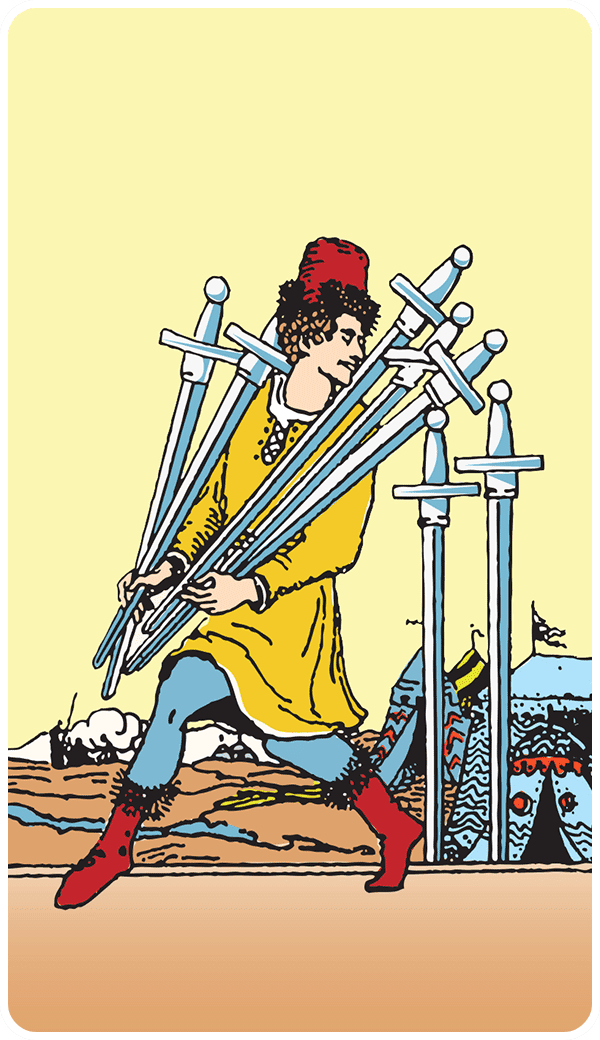
Seven of Swords · plate 7
MAYBE
The Seven of Swords in a yes/no reading leans toward maybe, and the maybe is structural, not mystical. The card describes a situation where someone is operating with incomplete information, hidden agendas, or a strategy that hasn't been disclosed yet. Most querents read this as "no, because someone is lying" or "yes, but you have to be sneaky about it." That's not what the card is doing. The Seven of Swords is naming the gap between what you think is happening and what is actually in motion. The yes-or-no frame assumes transparency the situation does not currently have.
Why Seven of Swords reads this way
What the suit, rank, and image are doing
Swords governs thought, communication, and the mental constructs you use to navigate conflict or complexity. It is the suit of strategy, discernment, and the stories you tell yourself about what is true. When Swords cards dominate a reading, the question is almost always about how someone is thinking through a problem, not what they are feeling about it.
Sevens in tarot describe a moment of assessment under pressure. The work has been done, the structure is in place, but something is misaligned or incomplete. The Seven of Pentacles is the gardener pausing to evaluate the crop. The Seven of Cups is the dreamer realizing they have too many options and no filter. The Seven of Swords is the strategist mid-execution, carrying something away from a situation that was not designed to let them leave with it.
Look at the image. A figure walks away from a camp, carrying five swords, leaving two behind. The posture is furtive. The camp is unguarded. The figure is not fighting; they are extracting. This is not theft in the moral sense. It is selective withdrawal. The card describes taking what you need from a situation that would not give it to you if you asked directly.
The most common misreading in a yes/no context is treating this as a card about deception — "someone is lying, so the answer is no." But the Seven of Swords does not describe lying. It describes operating outside the agreed-upon terms because the agreed-upon terms were not working. The question is not whether someone is being dishonest. The question is whether the situation allows for a clean yes or no in the first place.
How the answer shifts depending on what you are asking
If the question is "Will this person follow through on what they promised?" — the answer is no, but not because they are malicious. The Seven of Swords means they are already recalculating. They have not told you yet because they are still figuring out how to reframe it. The commitment you think you have is not the commitment they are currently holding.
If the question is "Should I go ahead with this plan?" — the answer is maybe, contingent on whether you are willing to operate with partial information and adjust mid-stream. The Seven of Swords in this position is not warning you off. It is telling you the plan will not go the way you think it will go, and you will need to improvise. If you need certainty to proceed, do not proceed. If you can move without certainty, the card is not stopping you.
Reversed, the Seven of Swords often means the hidden strategy has been exposed, or the querent is trying to be too clever and the situation requires directness instead. The answer in that case tilts toward no — not because the goal is wrong, but because the approach is.
The tell that you are misreading it
You are misreading the Seven of Swords if you are using it to confirm that someone else is the problem. The card does not assign blame. It describes a structural condition: someone is operating with information or priorities you do not have access to, and that asymmetry is the thing shaping the outcome. If you walk away from this reading thinking "they are lying to me," go back and ask what you are not saying either.
A grounded observation
Go back through the last six weeks and look for the moment you adjusted your plan without telling anyone. That is what the Seven of Swords is pointing to in the other direction.
Key themes to watch for
- № 01Theme
Affirmative current
- № 02Theme
Open door
- № 03Theme
Forward motion
What to do with this reading
Read the upright meaning first, even if you pulled the card reversed. The reversal is a commentary on the upright — not a separate card.
Notice what your body did when you saw Seven of Swords. That reaction is usually closer to the truth than the interpretation.
Write down one sentence: What is this card asking me to stop avoiding? Let the answer be smaller than you expect.
Come back to this card in 48 hours. Most yes / no readings sharpen with a little distance.
Questions answered
Frequently asked
The Seven of Swords in a yes/no reading leans toward maybe, and the maybe is structural, not mystical. The card describes a situation where someone is operating with incomplete information, hidden agendas, or a strategy that hasn't been disclosed yet. Most querents read this as "no, because someone is lying" or "yes, but you have to be sneaky about it." That's not what the card is doing. The Seven of Swords is naming the gap between what you think is happening and what is actually in motion. The yes-or-no frame assumes transparency the situation does not currently have.
Reversed cards are rarely "bad." Seven of Swords reversed asks you to look at where the same theme is blocked, postponed, or being avoided — usually with more compassion than the upright version.
Seven of Swords colors the cards around it. Pay attention to where its themes — mental clarity, the truth being named, what the mind needs to release — show up in the next card. That is usually where the story is.
Tarot is observational, not predictive. Seven of Swords describes the conditions in front of you right now and where they tend to lead if nothing changes — not a guarantee of timing.
Repeat cards are the deck underlining a theme. With Seven of Swords, that usually means the question you are asking is the right one — but you have not yet acted on what the card is showing you.
Read next
Related readings
More Swords · Yes / No
- Ace of Swords — Yes / NoHow Ace of Swords reads in a yes / no context.
- Two of Swords — Yes / NoHow Two of Swords reads in a yes / no context.
- Three of Swords — Yes / NoHow Three of Swords reads in a yes / no context.
- Four of Swords — Yes / NoHow Four of Swords reads in a yes / no context.
- Five of Swords — Yes / NoHow Five of Swords reads in a yes / no context.
- Six of Swords — Yes / NoHow Six of Swords reads in a yes / no context.
Other Seven of Swords readings
- General MeaningSeven of Swords read for general meaning.
- Love & RelationshipsSeven of Swords read for love & relationships.
- Career & WorkSeven of Swords read for career & work.
- Money & FinanceSeven of Swords read for money & finance.
- Health & WellbeingSeven of Swords read for health & wellbeing.
- SpiritualitySeven of Swords read for spirituality.