Two of Swords in Money
The Two of Swords in money readings is not indecision — it's the moment you're refusing to look at numbers you already know. Here's what the card is doing.
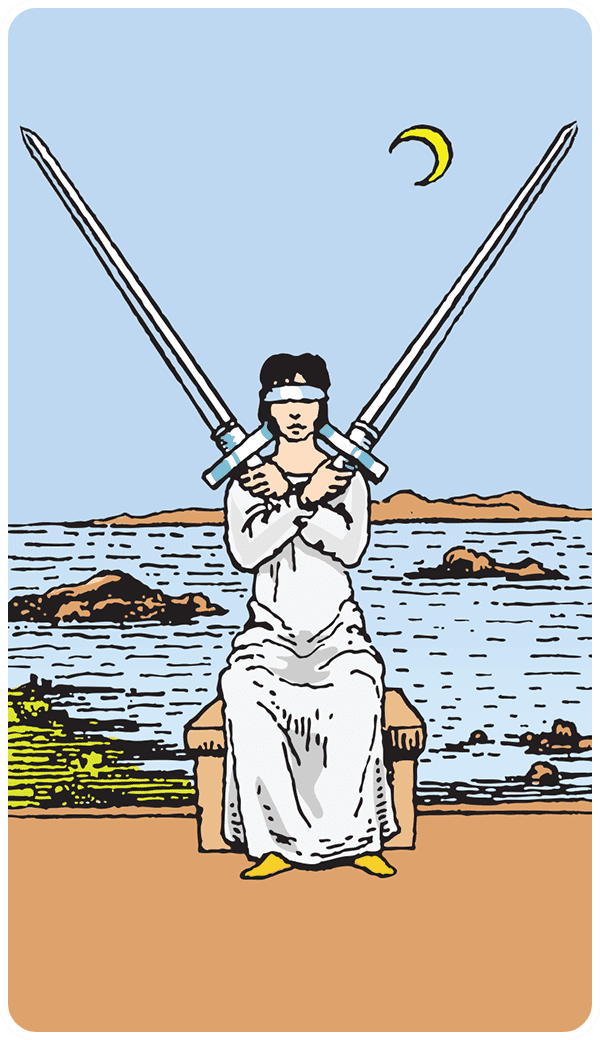
Two of Swords · plate 2
What the card is actually doing
The Two of Swords shows up in a finance reading and the querent says they can't decide. They're stuck between two options — take the job or stay, invest or hold, ask for the raise or wait another year. They want the card to tell them which path is right. That is not what the card is describing. The Two of Swords is not about indecision. It is about active refusal to look at information that is already available. The person is not stuck. They are stalling.
Reading Two of Swords in money
What the suit, the rank, and the image are doing
Swords governs thought, analysis, and the part of the mind that cuts through fog to name what is actually happening. It is the suit of clarity, of seeing the structure underneath the feeling. When Swords cards dominate a reading, the question is almost always about what the querent knows but has not yet said out loud.
Twos in tarot describe a holding pattern. They are not movement cards. The Ace opened a channel; the Two is what happens when that channel meets resistance and pauses. Twos are suspension, balance held by force, the moment before something tips. They describe a system under tension that cannot stay this way forever.
Now look at the image. A figure sits blindfolded, holding two swords crossed over their chest. The water behind them is calm but the rocks are sharp. The blindfold is the mechanical center of the card. It is not describing confusion. It is describing chosen ignorance. The figure is holding the swords in a defensive posture — they are protecting themselves from something, and what they are protecting themselves from is seeing.
In a finance reading, the Two of Swords names the moment you are refusing to open the bank statement, check the credit card balance, or calculate what the rent increase actually means for your budget. The information exists. You are actively not looking at it because looking at it will require you to act, and acting will cost you something you are not ready to give up.
How the card reads for two different situations
For someone asking whether to take a new job, the Two of Swords means they already know the current salary is not sustainable, but looking directly at the numbers will force them to admit they have to leave, and leaving means losing the thing they like about staying — the commute, the title, the person they report to. The stalemate is not between two equal options. It is between the known problem and the cost of solving it.
For someone asking whether to keep a business running, the Two of Swords means the revenue model stopped working six months ago and they have been moving money between accounts to avoid naming it. They are not weighing options. They are postponing the conversation with themselves about whether this thing they built is still viable. The card is not describing strategic patience. It is describing the moment before capitulation, held as long as possible.
The tell that someone is misreading the card on themselves
The querent says they need more information before they can decide. They need one more month of data, one more conversation, one more sign. But when you ask what specific information would change the decision, they cannot name it. That is the tell. The Two of Swords does not describe a lack of information. It describes a surfeit of information that the querent has decided not to synthesize because synthesis leads to action and action leads to loss.
Reversed, the card often marks the moment the blindfold comes off — not because the situation resolved, but because the cost of not looking finally exceeded the cost of looking. The querent opens the spreadsheet. They run the numbers. They see what they have been avoiding. What happens next is a different card, but the stalemate is over.
From the practice
“A card never tells you what to do. It tells you what you're already deciding — and gives you the words to name it.”
A grounded observation
Go back through your calendar and find the last time you said you needed to 'think about it' regarding money. Check whether you were actually missing information, or whether you were buying time before facing a number you already knew.
Key themes to watch for
- № 01Theme
Non-material wealth
- № 02Theme
Generosity
- № 03Theme
Values check
What to do with this reading
Read the upright meaning first, even if you pulled the card reversed. The reversal is a commentary on the upright — not a separate card.
Notice what your body did when you saw Two of Swords. That reaction is usually closer to the truth than the interpretation.
Write down one sentence: What is this card asking me to stop avoiding? Let the answer be smaller than you expect.
Come back to this card in 48 hours. Most money readings sharpen with a little distance.
Questions answered
Frequently asked
Financially, the Two of Swords suggests a period of careful consideration. Perhaps you're torn between saving or spending on something significant. This card invites you to pause and reflect on your financial priorities. Are you avoiding a decision because of fear or uncertainty? Take the time you need, but remember that clarity often comes from action. Notice what surfaces when you allow yourself to sit with the discomfort of not knowing.
Reversed, the card signals that financial indecision is becoming unsustainable. Perhaps circumstances demand a choice you’ve been avoiding. This might feel pressuring, but it also offers a chance to confront reality. Observe how stepping out of indecision impacts your financial landscape. Even if the decision isn't ideal, it can bring relief and a clearer path forward.
Two of Swords colors the cards around it. Pay attention to where its themes — mental clarity, the truth being named, what the mind needs to release — show up in the next card. That is usually where the story is.
Tarot is observational, not predictive. Two of Swords describes the conditions in front of you right now and where they tend to lead if nothing changes — not a guarantee of timing.
Repeat cards are the deck underlining a theme. With Two of Swords, that usually means the question you are asking is the right one — but you have not yet acted on what the card is showing you.
Read next
Related readings
More Swords · Money
- Ace of Swords — MoneyHow Ace of Swords reads in a money context.
- Three of Swords — MoneyHow Three of Swords reads in a money context.
- Four of Swords — MoneyHow Four of Swords reads in a money context.
- Five of Swords — MoneyHow Five of Swords reads in a money context.
- Six of Swords — MoneyHow Six of Swords reads in a money context.
- Seven of Swords — MoneyHow Seven of Swords reads in a money context.
Other Two of Swords readings
- General MeaningTwo of Swords read for general meaning.
- Love & RelationshipsTwo of Swords read for love & relationships.
- Career & WorkTwo of Swords read for career & work.
- Health & WellbeingTwo of Swords read for health & wellbeing.
- SpiritualityTwo of Swords read for spirituality.
- Yes / No AnswerTwo of Swords read for yes / no answer.