Ace of Swords in Money
The Ace of Swords in money readings gets read as breakthrough or clarity. What it actually describes is the cut that lets you see the structure clearly.
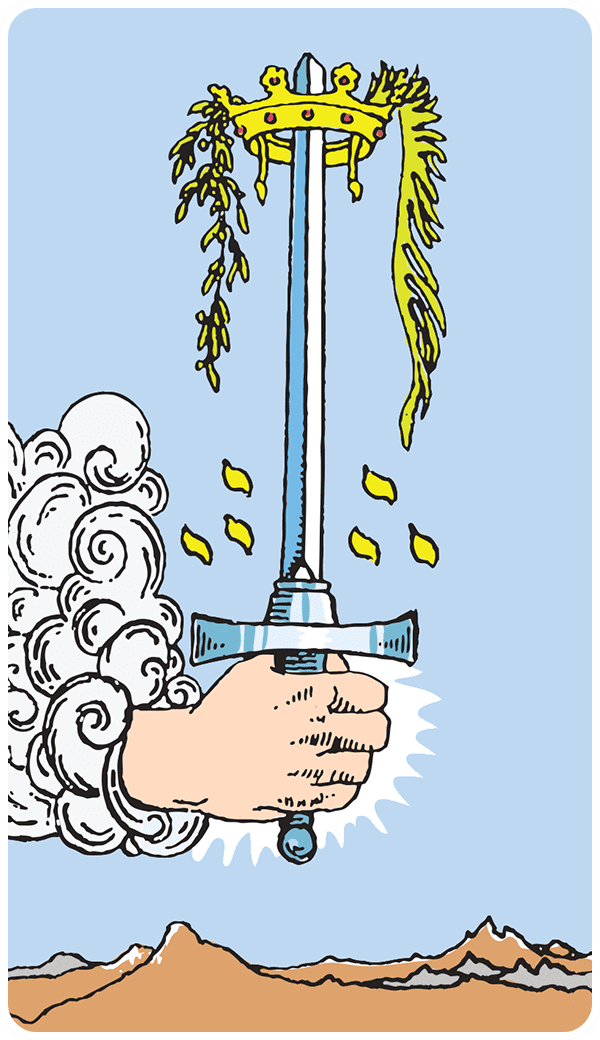
Ace of Swords · plate 1
What the card is actually doing
The Ace of Swords shows up in a finance reading and people hear it as good news. They read it as clarity arriving, as the fog lifting, as finally knowing what to do with the money question. That is close but not quite right. The card does not describe knowing what to do. It describes the moment the question becomes visible in its actual shape, which is often uncomfortable and rarely feels like relief.
Reading Ace of Swords in money
What the suit, the rank, and the image are each doing
Swords is the suit of thought, discernment, and the mental structures you use to parse reality. It governs how you think about a problem, what framework you apply, and whether your logic is working or has calcified into a story you keep telling yourself to avoid looking at the numbers. When Swords cards dominate a money reading, the issue is almost never the money itself — it is what you are telling yourself about the money, or what you are refusing to count.
Aces are thresholds, not arrivals. The Ace of Swords is not the decision made or the problem solved. It is the cut of a new thought arriving — the moment you see the situation differently than you saw it yesterday, and the old framework stops working. The image shows a hand emerging from a cloud, holding a sword upright. A crown sits on the tip. The sword cuts through air. It has not cut through anything material yet. The clarity is available, but applying it is a separate action.
The most common misreading in finance contexts is that the card means you now know what to do, and the knowing will make the doing easy. That is not how the card works. What it actually describes is the end of a specific confusion. You were telling yourself the business was fine and the Ace of Swords is the moment you look at the cash flow report and admit it is not fine. You were avoiding the credit card statement and the Ace of Swords is the moment you open it and see the number. The card does not tell you what happens next. It tells you that you can now see what is actually there.
How the card reads differently depending on what the querent is asking
If the querent is asking whether to make a financial move — an investment, a purchase, a job change — the Ace of Swords says the question has clarified but the answer has not. They now understand what the decision actually involves, which is different from knowing which direction to choose. The card often shows up right before someone realizes they have been asking the wrong question. They thought they were deciding whether to buy the house; the Ace of Swords is the moment they realize they are deciding whether they want to stay in the city at all.
If the querent is asking about money they are owed or money they owe, the Ace of Swords describes the moment the ambiguity ends. A number becomes fixed. A deadline gets named. The person who said they would pay you stops saying maybe and says no, and now you know. The card does not say whether the outcome is favorable. It says the outcome is now legible.
The tell that someone is misreading the card on themselves
The tell is that they feel relieved when they pull it, and then three weeks later they are angrier or more confused than they were before the reading. What happened is that they mistook the cut for the resolution. The Ace of Swords let them see the problem clearly, and seeing it clearly meant they could no longer pretend it was smaller or simpler than it was. The card did exactly what it does. They just thought clarity would feel like ease, and it almost never does.
From the practice
“A card never tells you what to do. It tells you what you're already deciding — and gives you the words to name it.”
A grounded observation
Go back through your calendar and look for the moment you stopped being confused and started being upset. That is usually when the Ace of Swords landed. The upset means the card worked.
Key themes to watch for
- № 01Theme
Non-material wealth
- № 02Theme
Generosity
- № 03Theme
Values check
What to do with this reading
Read the upright meaning first, even if you pulled the card reversed. The reversal is a commentary on the upright — not a separate card.
Notice what your body did when you saw Ace of Swords. That reaction is usually closer to the truth than the interpretation.
Write down one sentence: What is this card asking me to stop avoiding? Let the answer be smaller than you expect.
Come back to this card in 48 hours. Most money readings sharpen with a little distance.
Questions answered
Frequently asked
The Ace of Swords brings a fresh perspective to your financial situation. It's a time for clear thinking and strategic planning. You might find yourself reevaluating your approach to money, seeking new opportunities, or cutting through previously confusing financial jargon. Reflect on how this newfound clarity can help you make informed decisions. What financial goals can you set now that you have a clearer picture?
Reversed, the Ace of Swords indicates potential confusion in financial matters. Misunderstandings or overlooked details might lead to errors or stress. It's a reminder to be vigilant and thorough with your financial planning. Consider taking a moment to review your financial situation and ensure you have all the information you need.
Ace of Swords colors the cards around it. Pay attention to where its themes — mental clarity, the truth being named, what the mind needs to release — show up in the next card. That is usually where the story is.
Tarot is observational, not predictive. Ace of Swords describes the conditions in front of you right now and where they tend to lead if nothing changes — not a guarantee of timing.
Repeat cards are the deck underlining a theme. With Ace of Swords, that usually means the question you are asking is the right one — but you have not yet acted on what the card is showing you.
Read next
Related readings
More Swords · Money
- Two of Swords — MoneyHow Two of Swords reads in a money context.
- Three of Swords — MoneyHow Three of Swords reads in a money context.
- Four of Swords — MoneyHow Four of Swords reads in a money context.
- Five of Swords — MoneyHow Five of Swords reads in a money context.
- Six of Swords — MoneyHow Six of Swords reads in a money context.
- Seven of Swords — MoneyHow Seven of Swords reads in a money context.
Other Ace of Swords readings
- General MeaningAce of Swords read for general meaning.
- Love & RelationshipsAce of Swords read for love & relationships.
- Career & WorkAce of Swords read for career & work.
- Health & WellbeingAce of Swords read for health & wellbeing.
- SpiritualityAce of Swords read for spirituality.
- Yes / No AnswerAce of Swords read for yes / no answer.