Death in Love
Death in a love reading doesn't predict breakup. It names the relationship structure that's already ended—and the part of you still performing the old script.
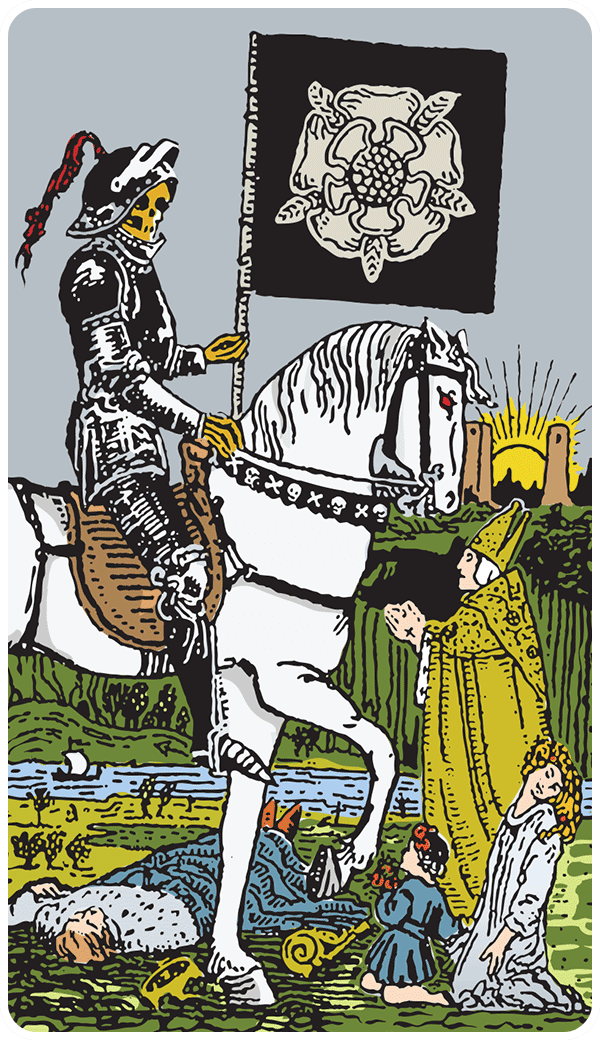
Death · plate 13
What the card is actually doing
Death shows up in a love reading and the querent goes silent. They assume I'm about to tell them the relationship is ending. Sometimes they ask if they should leave. Sometimes they ask if their partner is about to leave them. Neither is what the card is saying. Death does not predict breakup. It names the thing that has already died—the version of the relationship that was working six months ago, the unspoken contract that stopped being honored, the person you were when you met them. The shock is not that something is ending. The shock is that you've been walking around in the aftermath pretending it didn't.
Reading Death in love
What the card structure is doing and why people panic
Death is Major Arcana, which means it describes a psychological threshold, not a logistical event. Major cards govern the internal architecture—identity shifts, ego deaths, the collapse of a story you were using to organize your life. Death specifically governs the moment a structure becomes uninhabitable. The skeleton on the horse is not killing anyone; it is clearing the field. The bodies on the ground are not people; they are versions of selfhood that no longer function. The sun rising between the towers in the distance is not hope; it is what becomes visible once the old structure stops blocking the view.
People panic because they assume tarot is predictive. They think Death means "your relationship will end." But the card does not work temporally. It works structurally. It names the thing that has already ended, whether or not you have said the words out loud yet. The relationship where you could ask for what you needed without it becoming a fight—that ended four months ago. The version of your partner who used to prioritize you—that person is not coming back. The fantasy that if you just explain yourself better they will finally understand—that ended the third time you had the same fight.
The card is not telling you to leave. It is telling you that you are still performing a script for a play that closed.
How it reads differently depending on what died
For someone in a long-term relationship, Death often names the end of the honeymoon contract. The version where you didn't have to negotiate, where attraction did the work, where you both wanted the same things at the same time without having to say so. That version is over. What comes next requires a different skill set—explicit negotiation, stated needs, the ability to want different things in the same room without it feeling like rejection. Most people read this as "the love is gone." The love is not gone. The structure that was holding the love just collapsed, and now you have to build a different one.
For someone in a new relationship, Death usually points to the end of the projection phase. The person you thought they were based on three dates and two late-night texts—that person does not exist. The relationship you were imagining based on how they looked at you once—that is not the relationship you are in. The card is not saying the relationship is doomed. It is saying the fantasy version just died, and now you are meeting the actual person. Whether you want the actual person is a separate question.
The tell that you are misreading it
You are misreading Death if you are asking "should I stay or go" and treating the card as the answer. The card does not answer that question. It describes the condition you are in: you are standing in a structure that already ended, and you have not yet admitted it. The decision about what to do next is yours. The card just names what you already know and have been avoiding. If you pull Death and feel relief, you are not misreading it. If you pull Death and immediately start defending why the relationship is still good, you are.
From the practice
“A card never tells you what to do. It tells you what you're already deciding — and gives you the words to name it.”
A grounded observation
Go back through your texts from the last two months. Find the moment you stopped saying what you actually wanted and started managing how you said it. That is when it died.
Key themes to watch for
- № 01Theme
Vulnerability
- № 02Theme
New chapters
- № 03Theme
Emotional truth
What to do with this reading
Read the upright meaning first, even if you pulled the card reversed. The reversal is a commentary on the upright — not a separate card.
Notice what your body did when you saw Death. That reaction is usually closer to the truth than the interpretation.
Write down one sentence: What is this card asking me to stop avoiding? Let the answer be smaller than you expect.
Come back to this card in 48 hours. Most love readings sharpen with a little distance.
Questions answered
Frequently asked
In the realm of love, Death suggests the end of a phase. This could mean a relationship transforming or even concluding. It's a signal to evaluate what truly matters in your connections and what might need to be released. Perhaps it's time to let go of old patterns or expectations that no longer fit. While endings can be painful, they often make space for deeper, more authentic bonds. Reflect on what love means to you now and what you're ready to welcome into your heart.
Reversed, Death in love points to an avoidance of change. You might be clinging to a relationship pattern that's not working or resisting a necessary conversation. This stagnation can lead to dissatisfaction. Consider what fears are keeping you in a holding pattern and whether you're ignoring the signs calling for evolution. It's not about forcing change but being honest with yourself about your needs and desires. What could shift if you allowed space for growth?
Death colors the cards around it. Pay attention to where its themes — archetype, pattern, invitation — show up in the next card. That is usually where the story is.
Tarot is observational, not predictive. Death describes the conditions in front of you right now and where they tend to lead if nothing changes — not a guarantee of timing.
Repeat cards are the deck underlining a theme. With Death, that usually means the question you are asking is the right one — but you have not yet acted on what the card is showing you.
Read next