Justice in Love
Justice in love readings gets read as karmic reunion or fairness finally arriving. What it actually describes is the moment you stop pretending the imbalance wasn't there.
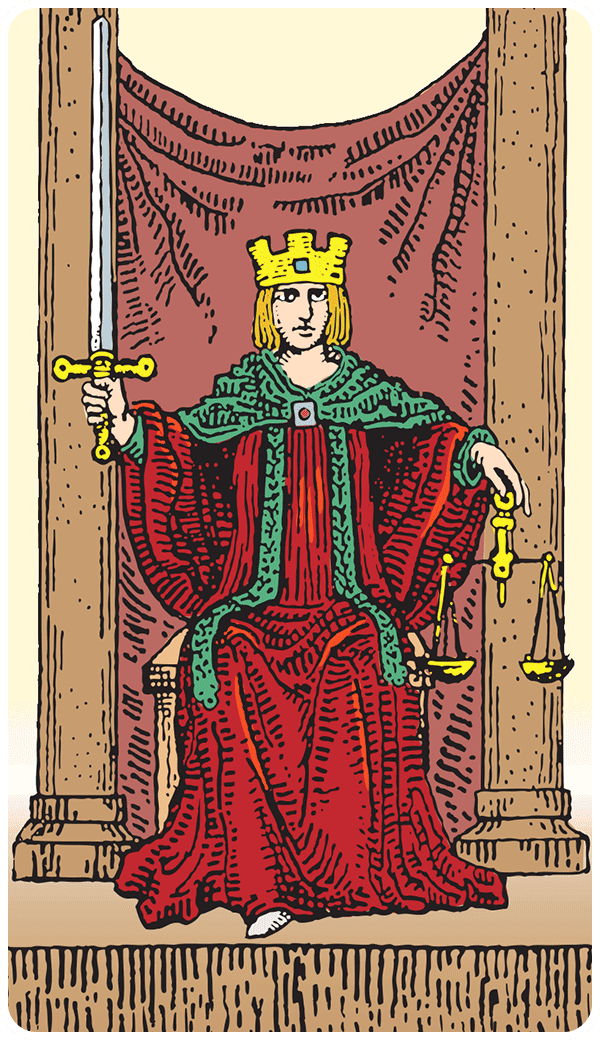
Justice · plate 11
What the card is actually doing
Justice shows up in a love reading and the querent exhales. They think it means the relationship will finally balance out. That the person who's been withholding will suddenly show up. That the universe is about to deliver fairness after months of emotional labor that went nowhere.
That is not what the card is describing. Justice does not predict correction. It names the moment you see the imbalance clearly enough to stop participating in it.
Reading Justice in love
What the Major Arcana rank and the image are doing
Justice is Major Arcana, which means it describes a structural reckoning, not a feeling state. Major cards point to the architecture underneath the relationship — the agreements you made without saying them out loud, the power dynamic you've been pretending is equal, the thing you've known for six months but haven't named yet. When Justice arrives, the knowing moves from the back of your mind to the front.
Look at the image. A figure sits on a throne, holding a sword in one hand and scales in the other. The sword is upright. The scales are level. This is not a card about emotion or longing or chemistry. It is a card about measurement. The scales weigh what was given against what was returned. The sword cuts through the story you've been telling yourself about why the imbalance was temporary or acceptable or your fault. Most people read Justice as "fairness is coming." What it actually shows is "you can now see what the terms were."
The most common misreading in love contexts is treating Justice as karmic reward. The querent thinks: I've been patient, I've been understanding, I've given this person space and time and second chances, so now the universe will make them reciprocate. But Justice does not enforce fairness. It reveals the measurement. If the scales have been uneven, the card is naming that fact, not promising it will change.
How the card reads for two different querent situations
For someone in an established relationship where resentment has been building, Justice shows up as the conversation they've been avoiding. The one where they finally say "I need you to show up differently or I'm done." The card marks the moment they stop hoping the other person will notice on their own. It describes clarity, not resolution. What happens after the conversation is separate cards.
For someone waiting for an ex to come back or a situationship to solidify, Justice tends to read as the end of the waiting. Not because the person returns, but because the querent finally sees the pattern clearly enough to stop checking their phone. The scales measure what was offered against what was withheld, and the sword cuts the fantasy that "more time" would have changed the ratio. The card is not cruel. It is specific.
The tell that someone is misreading Justice on themselves
If you pull Justice in a love reading and your first thought is "they're finally going to treat me right," you are misreading the card. Justice does not arrive to fix the other person. It arrives when you are ready to see what the terms actually were and make a decision based on that information. The card assumes you already know. It is naming the moment you stop pretending you don't.
From the practice
“A card never tells you what to do. It tells you what you're already deciding — and gives you the words to name it.”
A grounded observation
Go back through your texts from the last two months. If you've been explaining, justifying, or asking for reassurance more than twice a week, the scales were already uneven. Justice is the moment you let yourself see it.
Key themes to watch for
- № 01Theme
Vulnerability
- № 02Theme
New chapters
- № 03Theme
Emotional truth
What to do with this reading
Read the upright meaning first, even if you pulled the card reversed. The reversal is a commentary on the upright — not a separate card.
Notice what your body did when you saw Justice. That reaction is usually closer to the truth than the interpretation.
Write down one sentence: What is this card asking me to stop avoiding? Let the answer be smaller than you expect.
Come back to this card in 48 hours. Most love readings sharpen with a little distance.
Questions answered
Frequently asked
In love, Justice suggests a time of clarity and honesty. Relationships may need a bit of balancing, with open conversations leading to greater understanding. If there have been misunderstandings, now is the time to address them with transparency. This card encourages both partners to be honest about their needs and expectations. Reflect on how balance and fairness play a role in your relationship, and consider if both parties feel heard and respected. It's a moment to ensure that love is built on mutual respect and equality.
Reversed in love readings, Justice may hint at misunderstandings or feelings of inequality. There might be a sense that one partner feels more burdened or unheard, leading to tension. It’s a call to examine whether there’s a lack of fairness or honesty in the relationship. Reflect on any imbalances and consider if both partners have a voice in decision-making. This card invites you to explore how equity and justice could be better integrated into your relationship dynamics, ensuring a more harmonious bond.
Justice colors the cards around it. Pay attention to where its themes — archetype, pattern, invitation — show up in the next card. That is usually where the story is.
Tarot is observational, not predictive. Justice describes the conditions in front of you right now and where they tend to lead if nothing changes — not a guarantee of timing.
Repeat cards are the deck underlining a theme. With Justice, that usually means the question you are asking is the right one — but you have not yet acted on what the card is showing you.
Read next
Related readings
Other Justice readings