Six of Cups in Love
The Six of Cups in love readings gets read as 'an ex is coming back.' What it actually describes is the moment you notice you're using memory as a replacement for presence.
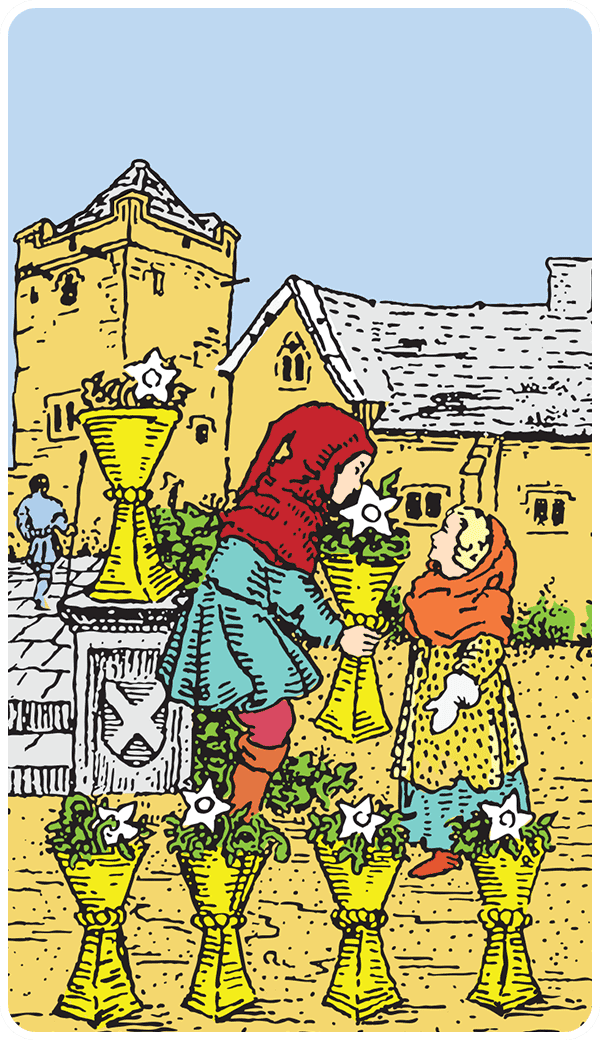
Six of Cups · plate 6
What the card is actually doing
The Six of Cups shows up in a love reading and the querent immediately asks if their ex is coming back. Sometimes they don't even wait for me to turn the next card. They've already decided what it means: reconciliation, reunion, the past returning. That is not what the card is describing. The Six of Cups names a specific relationship between memory and present feeling. It points to the moment you realize you've been holding an old attachment in the place where a current one should be. Most people read it backward and spend months waiting for someone who was never on their way.
Reading Six of Cups in love
What the suit, the rank, and the image are doing
Cups governs emotional attachment — how you bond, what you long for, where tenderness lives in the body. It is the suit of felt connection, not the logistics of connection. When Cups cards cluster in a reading, the question is always about the heart, even if the querent phrased it as a question about timing.
Sixes in tarot describe reciprocity and exchange. The Six of Pentacles is material give-and-take; the Six of Swords is the trade of one mental framework for another. Sixes name the moment two things are moving toward balance, or the moment you notice they aren't balanced and have to decide what to do about it. They are transactional cards, in the best and worst sense of that word.
Now look at the image. Two children in a courtyard. One child hands the other a cup filled with flowers. The exchange is gentle, but it is also static. No one is walking toward anyone. The children are not adults. The flowers are not growing; they have been cut and placed. This is memory as object. The card is describing the moment you realize you are emotionally trading with the past — offering feeling to something that is no longer present, receiving comfort from something that cannot answer back.
How it reads when the ex is actually involved versus when they aren't
If the querent is in active contact with an ex — texts, logistics, shared custody, overlapping friend groups — the Six of Cups describes the pattern underneath the contact. It names the moment they notice they're performing the old relationship instead of having a current one. They're being sweet in the exact register the ex used to respond to. They're re-gifting emotional moves that worked in 2019. The card is not saying the ex will come back. It is saying the querent is still oriented toward a version of the relationship that no longer exists, and that orientation is preventing them from seeing what is actually available now.
If the querent has not spoken to the ex in months or years, the Six of Cups is even more direct. It describes nostalgia as an active block. The person is not waiting for the ex. They are using the memory of the ex as a way to avoid being available to anyone new. Every date gets compared to the early days of the old relationship. Every new person gets measured against a version of the ex that has been edited in memory to remove the parts that didn't work. The card is naming the mechanism, not predicting a reunion.
The tell that someone is misreading the card on themselves
The querent says the card means their ex is thinking about them, or that reconciliation is coming, and then they do not act on that belief. They do not text. They do not reach out. They wait. If you actually believed someone was coming back, you would test it. The fact that the querent is using the card as a reason to stay passive is the tell. What they are actually doing is using the card to avoid grief. The Six of Cups is naming the avoidance, not confirming the fantasy.
From the practice
“A card never tells you what to do. It tells you what you're already deciding — and gives you the words to name it.”
A grounded observation
Go back through your texts from the last six months. If you find yourself telling the same story about the same ex to three different people, the Six of Cups is describing you. The story is the block.
Key themes to watch for
- № 01Theme
Vulnerability
- № 02Theme
New chapters
- № 03Theme
Emotional truth
What to do with this reading
Read the upright meaning first, even if you pulled the card reversed. The reversal is a commentary on the upright — not a separate card.
Notice what your body did when you saw Six of Cups. That reaction is usually closer to the truth than the interpretation.
Write down one sentence: What is this card asking me to stop avoiding? Let the answer be smaller than you expect.
Come back to this card in 48 hours. Most love readings sharpen with a little distance.
Questions answered
Frequently asked
In the realm of love, the Six of Cups brings echoes of sweet, nostalgic moments. It may point to a reconnection with an old flame or the comforting familiarity in a current relationship. This card nudges you to cherish shared memories, which can deepen your bond. It’s an invitation to create new ones with the same warmth and sincerity. As you look back on cherished moments, think about how they can inspire future romantic gestures, fostering a deeper connection.
Reversed, the Six of Cups suggests that past relationships or unresolved feelings might be clouding your current romantic life. Perhaps there's a habit of comparing the present to an idealized past. This can lead to dissatisfaction and missed opportunities. It might be time to examine these emotions and see if they are hindering your ability to fully engage with your present relationship. How can you begin to release these ties to make space for what is yet to come?
Six of Cups colors the cards around it. Pay attention to where its themes — emotional intimacy, felt-sense knowing, where the water level is rising — show up in the next card. That is usually where the story is.
Tarot is observational, not predictive. Six of Cups describes the conditions in front of you right now and where they tend to lead if nothing changes — not a guarantee of timing.
Repeat cards are the deck underlining a theme. With Six of Cups, that usually means the question you are asking is the right one — but you have not yet acted on what the card is showing you.
Read next
Related readings
More Cups · Love
- Ace of Cups — LoveHow Ace of Cups reads in a love context.
- Two of Cups — LoveHow Two of Cups reads in a love context.
- Three of Cups — LoveHow Three of Cups reads in a love context.
- Four of Cups — LoveHow Four of Cups reads in a love context.
- Five of Cups — LoveHow Five of Cups reads in a love context.
- Seven of Cups — LoveHow Seven of Cups reads in a love context.
Other Six of Cups readings
- General MeaningSix of Cups read for general meaning.
- Career & WorkSix of Cups read for career & work.
- Money & FinanceSix of Cups read for money & finance.
- Health & WellbeingSix of Cups read for health & wellbeing.
- SpiritualitySix of Cups read for spirituality.
- Yes / No AnswerSix of Cups read for yes / no answer.