Ace of Cups in General
The Ace of Cups is not an arrival. It's the moment the emotional channel opens again. Here's what that actually means and how to tell if you're misreading it.
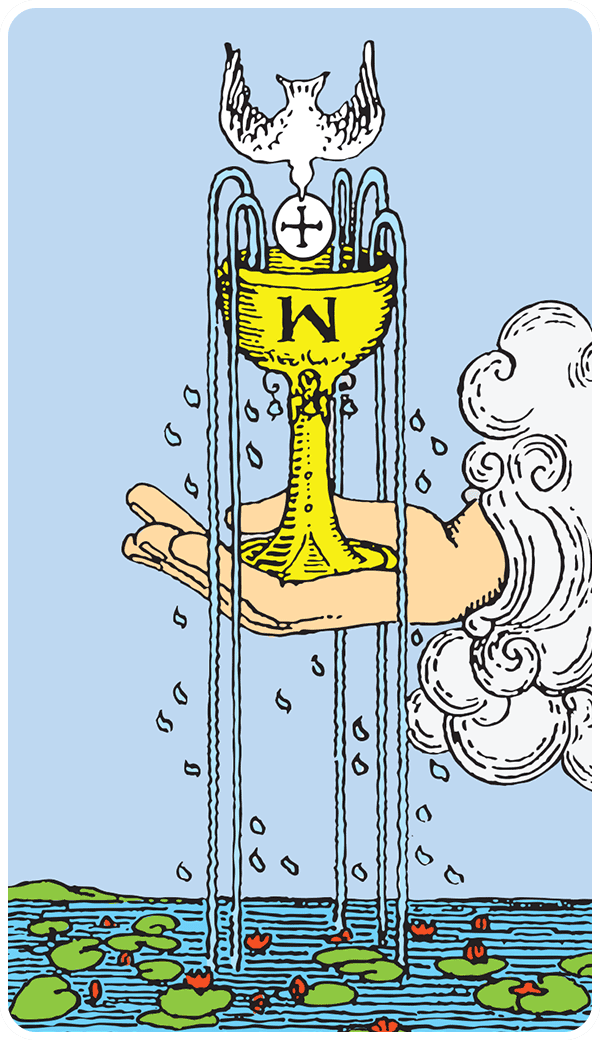
Ace of Cups · plate 1
What the card is actually doing
The Ace of Cups appears and most people read it as confirmation that something good is finally coming. A new relationship. A creative breakthrough. The thing they've been waiting for. That is not what the card is saying. The Ace of Cups names the moment your heart becomes available again — the precondition for something to move through you, not the something itself. The misreading is so common that I watch it happen at my table three times a week.
Reading Ace of Cups in general
What the suit, rank, and image are each doing
Cups governs the emotional body. It is the suit of how you feel, how feeling moves between you and the world, and what you are capable of receiving when your heart is open versus when it is closed. When Cups cards show up, the question being answered is almost always about capacity for connection, even if the querent asked about money or next steps.
Aces are thresholds. They are not completions. An Ace is the moment a door opens — the availability of a new channel, not the thing that will eventually move through that channel. The Ace of Pentacles is not money; it is the ground for a material opportunity. The Ace of Swords is not the answer; it is the cut of a new thought arriving. Aces describe potential that has just become accessible.
Now look at the image. A hand emerges from a cloud, holding a cup. Water overflows in five streams. A dove descends. The cup is being offered. It has not been accepted. It has not been drunk from. It is suspended, extended toward you, waiting. The Ace of Cups is the moment the emotional channel opens. You can feel again. Something can move through you that was not moving through you last month.
How the card reads for two different situations
If you have been numb or defended or shut down — if you spent six months not crying, not hoping, not letting anyone in — the Ace of Cups is the first morning you wake up and feel something other than static. You notice beauty. You laugh at a joke. You think about the future without your chest tightening. The channel is open again. What moves through it next is a separate question.
If you have been waiting for permission to start something — a creative project, a vulnerable conversation, a risk you've been circling — the Ace of Cups is the moment the internal gate lifts. You are no longer talking yourself out of it. The emotional availability is there. Whether you act on it is still your choice, but the card names that the blockage has cleared.
Reversed, the Ace of Cups often points to the same threshold being offered and refused. The cup is there. You are not taking it. Sometimes this is wisdom — you are correctly protecting yourself from reopening too soon. Sometimes it is fear dressed as discernment.
The tell that you are misreading it
If you pull the Ace of Cups and immediately start scanning the horizon for who or what is about to arrive, you are misreading it. The card is not a promise. It is a description of your current state. The question it answers is not "what is coming" but "what is now possible that was not possible before." If three months later you feel disappointed that nothing happened, go back and check: did your chest unclench? Did you stop bracing? Did you let someone see you? That was the card.
From the practice
“A card never tells you what to do. It tells you what you're already deciding — and gives you the words to name it.”
A grounded observation
The next time the Ace of Cups appears, ask yourself what you can now feel that you could not feel two weeks ago. That is the card's actual subject.
Key themes to watch for
- № 01Theme
Beginnings
- № 02Theme
Inner movement
- № 03Theme
Receptivity
What to do with this reading
Read the upright meaning first, even if you pulled the card reversed. The reversal is a commentary on the upright — not a separate card.
Notice what your body did when you saw Ace of Cups. That reaction is usually closer to the truth than the interpretation.
Write down one sentence: What is this card asking me to stop avoiding? Let the answer be smaller than you expect.
Come back to this card in 48 hours. Most general readings sharpen with a little distance.
Questions answered
Frequently asked
The Ace of Cups in an upright position is like the first sip of cool water on a hot day, refreshing and life-giving. It suggests the start of something emotionally fulfilling, perhaps a new friendship or a fresh creative endeavor. You might find yourself experiencing a surge of compassion or the desire to give and receive love more freely. This card invites you to notice where your heart feels open and ready for new experiences. Consider where you might let this newfound emotional abundance flow into your life.
When reversed, the Ace of Cups can feel like a cup tipped over, spilling emotions in unexpected directions. There might be feelings of emotional blockage or a sense of stagnation in relationships. It's a signal that something might be preventing you from expressing or receiving love freely. Reflect on where you might be holding back or if there's an emotional wound that needs attention. This isn’t a time for pressure; it might be more about gentle introspection and understanding what your heart truly needs.
Ace of Cups colors the cards around it. Pay attention to where its themes — emotional intimacy, felt-sense knowing, where the water level is rising — show up in the next card. That is usually where the story is.
Tarot is observational, not predictive. Ace of Cups describes the conditions in front of you right now and where they tend to lead if nothing changes — not a guarantee of timing.
Repeat cards are the deck underlining a theme. With Ace of Cups, that usually means the question you are asking is the right one — but you have not yet acted on what the card is showing you.
Read next
Related readings
More Cups · General
- Two of Cups — GeneralHow Two of Cups reads in a general context.
- Three of Cups — GeneralHow Three of Cups reads in a general context.
- Four of Cups — GeneralHow Four of Cups reads in a general context.
- Five of Cups — GeneralHow Five of Cups reads in a general context.
- Six of Cups — GeneralHow Six of Cups reads in a general context.
- Seven of Cups — GeneralHow Seven of Cups reads in a general context.
Other Ace of Cups readings
- Love & RelationshipsAce of Cups read for love & relationships.
- Career & WorkAce of Cups read for career & work.
- Money & FinanceAce of Cups read for money & finance.
- Health & WellbeingAce of Cups read for health & wellbeing.
- SpiritualityAce of Cups read for spirituality.
- Yes / No AnswerAce of Cups read for yes / no answer.