Three of Swords in Health
The Three of Swords in health readings gets read as diagnosis or crisis. What it actually describes is the moment the body's message finally breaks through denial.
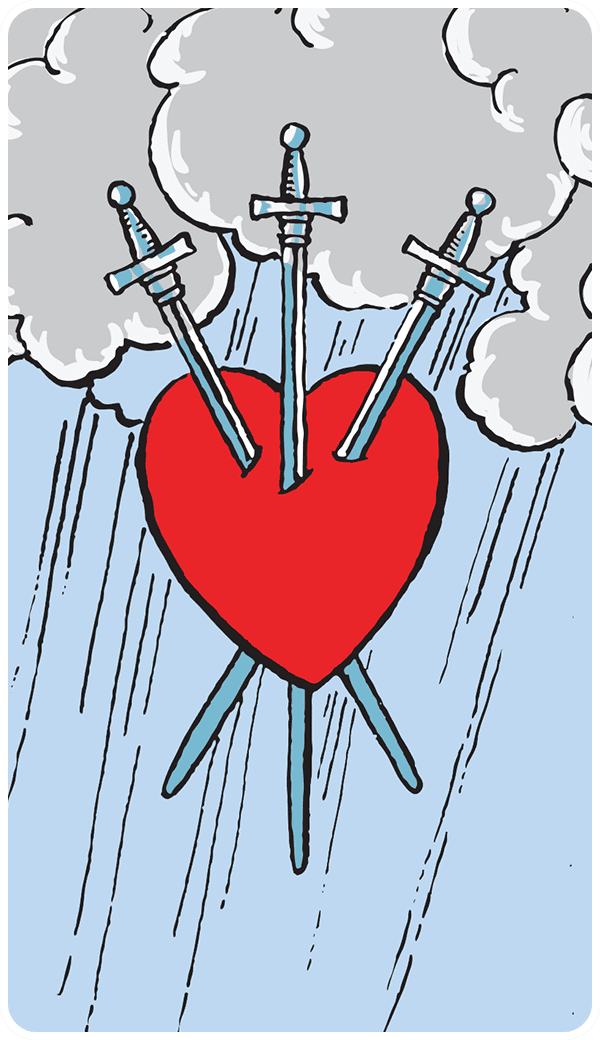
Three of Swords · plate 3
What the card is actually doing
The Three of Swords shows up in a health reading and the querent's first move is to ask if something is seriously wrong. They want to know if the card is naming a diagnosis, a collapse, an emergency. The answer is almost always no — and the fact that they're asking that question instead of a different one is usually the entire point of the card.
What the Three of Swords describes is not the arrival of a health problem. It describes the moment you stop pretending the problem isn't there. The piercing is the truth landing. The swords are the thoughts you've been refusing to think. The card reads as crisis because acknowledgment feels like crisis when you've been running from it long enough.
Reading Three of Swords in health
What the suit, rank, and image are doing on the card
Swords is the suit of thought, pattern recognition, and the stories you tell yourself about what's happening. In a health context, Swords governs how you interpret bodily signals — what you notice, what you dismiss, what you frame as normal wear-and-tear versus what you frame as a problem that requires action. When Swords cards dominate a health reading, the question is almost never "what is wrong with my body." The question is "what am I thinking about what's wrong with my body, and is that thought accurate."
Three in tarot is the number of something becoming undeniable. Twos hold tension between two options. Threes are the point where a third element enters and forces resolution. The dynamic can no longer stay suspended. In Swords, that third element is usually the thought you didn't want to have.
The image: a heart pierced by three swords, rain falling, gray sky. No person. No hand holding the swords. The piercing has already happened. This is not the moment of injury. This is the moment of recognizing the injury was there. The card is about realization, not rupture. Most people miss this. They see the image and read it as violence incoming. The violence already occurred. What's happening now is that you're finally looking at it.
How the card reads for two different querent situations
For someone who has been ignoring symptoms — the headaches that come every afternoon, the shoulder that hasn't moved right in six months, the sleep that stopped working a year ago — the Three of Swords is the morning they wake up and think "I can't keep doing this." The card doesn't cause the problem. It names the moment the denial breaks. What tends to follow is a doctor's appointment they should have made eight months earlier, a conversation they've been avoiding, a habit they finally admit is making things worse.
For someone already in treatment or recovery, the Three of Swords often describes the grief that arrives once the crisis stabilizes. The diagnosis is managed, the surgery is behind them, the acute phase is over, and now they're sitting with what was lost — the version of their body that used to work differently, the plans that have to change, the story they were telling about their own durability. The card reads as heartbreak because it is heartbreak. The body you had is not the body you have now, and pretending otherwise stops working.
The tell that someone is misreading the card on themselves
The misreading sounds like this: "The Three of Swords means something bad is going to happen to my health." If you hear yourself say that, you're reading the card backward. Go back through the last six months and look for the thing you've been minimizing. The card is not forecasting. It's reflecting. What have you been telling yourself is fine when it isn't fine? What symptom have you been explaining away? What conversation with a doctor have you been postponing because you don't want the answer?
The Three of Swords does not arrive to warn you. It arrives because the warning already happened and you didn't take it. The swords are in the heart because the truth is in your chest and you've been holding your breath around it. The card is the exhale.
From the practice
“A card never tells you what to do. It tells you what you're already deciding — and gives you the words to name it.”
A grounded observation
If the Three of Swords shows up in a health reading, the next card in the spread will usually tell you what you do with the realization. The Three itself is just the moment the door closes on the version of the story where you didn't know.
Key themes to watch for
- № 01Theme
Emotional renewal
- № 02Theme
Mind-body link
- № 03Theme
Soft restoration
What to do with this reading
Read the upright meaning first, even if you pulled the card reversed. The reversal is a commentary on the upright — not a separate card.
Notice what your body did when you saw Three of Swords. That reaction is usually closer to the truth than the interpretation.
Write down one sentence: What is this card asking me to stop avoiding? Let the answer be smaller than you expect.
Come back to this card in 48 hours. Most health readings sharpen with a little distance.
Questions answered
Frequently asked
In matters of health, the Three of Swords upright points to stress or emotional strain affecting your wellbeing. It’s a signal that the heart and mind might be weighed down, impacting your physical state. This card serves as a reminder to address any emotional burdens that could be manifesting physically. It invites you to seek balance and find ways to nurture yourself during this time.
Reversed, this card suggests a path towards healing and recovery. The emotional or mental clouds that have been impacting your health might be starting to lift. It's an encouraging sign that healing is possible, and you’re moving towards a more balanced state. Consider how you can continue to support this journey by focusing on self-care and emotional well-being.
Three of Swords colors the cards around it. Pay attention to where its themes — mental clarity, the truth being named, what the mind needs to release — show up in the next card. That is usually where the story is.
Tarot is observational, not predictive. Three of Swords describes the conditions in front of you right now and where they tend to lead if nothing changes — not a guarantee of timing.
Repeat cards are the deck underlining a theme. With Three of Swords, that usually means the question you are asking is the right one — but you have not yet acted on what the card is showing you.
Read next
Related readings
More Swords · Health
- Ace of Swords — HealthHow Ace of Swords reads in a health context.
- Two of Swords — HealthHow Two of Swords reads in a health context.
- Four of Swords — HealthHow Four of Swords reads in a health context.
- Five of Swords — HealthHow Five of Swords reads in a health context.
- Six of Swords — HealthHow Six of Swords reads in a health context.
- Seven of Swords — HealthHow Seven of Swords reads in a health context.
Other Three of Swords readings
- General MeaningThree of Swords read for general meaning.
- Love & RelationshipsThree of Swords read for love & relationships.
- Career & WorkThree of Swords read for career & work.
- Money & FinanceThree of Swords read for money & finance.
- SpiritualityThree of Swords read for spirituality.
- Yes / No AnswerThree of Swords read for yes / no answer.