Ace of Swords in Health
The Ace of Swords in health readings gets read as breakthrough or diagnosis. What it actually describes is the moment clarity about the body becomes possible.
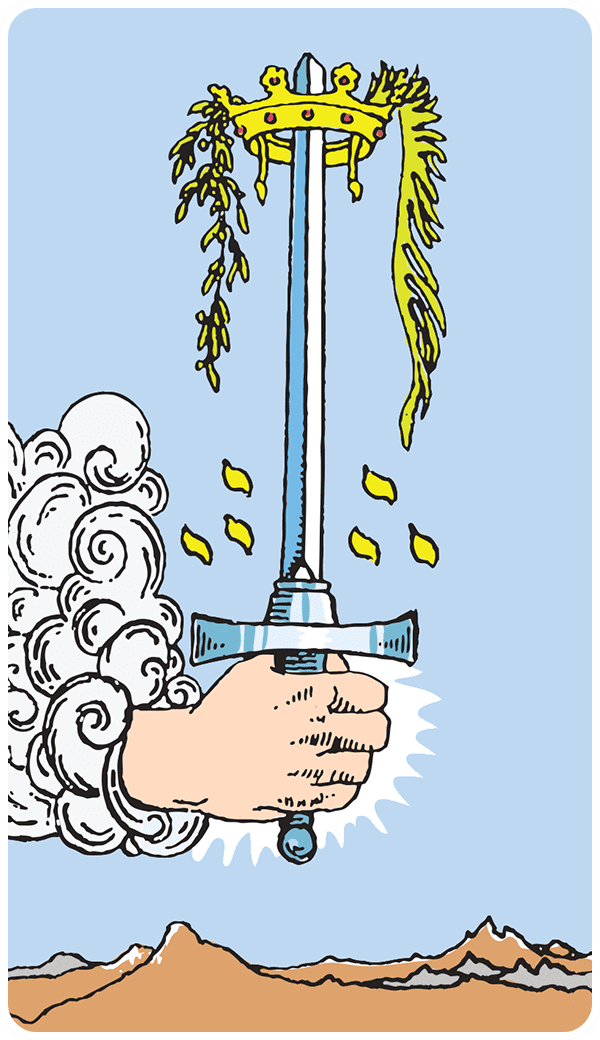
Ace of Swords · plate 1
What the card is actually doing
The Ace of Swords shows up in a health reading and the querent assumes it means diagnosis. A test result is coming. A doctor will finally name what's wrong. The mystery will resolve. That is one version of what the card can describe, but it is not the mechanical function of the card itself. The Ace of Swords is not the answer. It is the cut that makes the answer visible.
Reading Ace of Swords in health
What the suit, the rank, and the image are doing
Swords governs the mental realm — thought, perception, language, the part of you that names things and decides what they mean. In a health context, Swords is not the body. It is how you think about the body. It is the difference between "I am tired" and "I have been tired for six weeks and that means something." It is the frame through which physical experience becomes legible.
Aces are thresholds. They describe the moment a new channel opens, not what moves through the channel after. The Ace of Swords specifically is the arrival of a new thought — sharp, clarifying, often uncomfortable. It is the cut of insight. The card shows a hand emerging from a cloud, holding an upright sword. A crown sits at the tip. The sword has not struck anything yet. It is being offered. This is the moment before the cut, or the moment the cut has just been made and you are seeing clearly for the first time.
In health readings, the most common misreading is conflating clarity with outcome. The querent wants the Ace of Swords to mean "you will get better" or "the treatment will work." What it actually describes is: you are about to understand something about your body that you did not understand before. Whether that understanding leads to improvement is a separate question, answered by separate cards.
How the card reads differently depending on what the querent is asking
If the querent has been in diagnostic limbo — symptoms with no name, doctors who shrug, tests that come back inconclusive — the Ace of Swords often describes the moment the fog lifts. Not because a diagnosis arrives from outside, but because the querent finally articulates what they have been feeling in a way that makes the next step obvious. The card reads as: you are about to cut through your own confusion. The insight might come from a provider, or it might come from your own pattern recognition, but the shift is cognitive.
If the querent is in denial about a health issue — pushing through fatigue, ignoring pain, explaining away symptoms — the Ace of Swords reads more like exposure. The truth you have been avoiding is about to become impossible to ignore. The card does not promise that facing it will be comfortable. It promises that not facing it is no longer an option. The cut here is not kind. It is clarifying.
Reversed, the Ace of Swords often describes the thought that has not yet landed. The test results are delayed. The symptoms are vague. The querent knows something is wrong but cannot yet name it in a way that moves anything forward. The clarity is available but not accessible.
The tell that someone is misreading the card on themselves
The tell is when the querent treats the Ace of Swords as permission to stop paying attention. They assume clarity means resolution, so they stop tracking symptoms, stop advocating with providers, stop asking questions. Three months later, nothing has changed, and they feel betrayed by the reading. What actually happened is they mistook the arrival of a sharp thought for the completion of a process. The Ace of Swords names the cut. What you do after the cut is the rest of the deck.
From the practice
“A card never tells you what to do. It tells you what you're already deciding — and gives you the words to name it.”
A grounded observation
Go back through your calendar and look for the week you finally said the thing out loud — to a doctor, to yourself, in your notes app at 2 a.m. That was the Ace of Swords. What happened next was everything else.
Key themes to watch for
- № 01Theme
Emotional renewal
- № 02Theme
Mind-body link
- № 03Theme
Soft restoration
What to do with this reading
Read the upright meaning first, even if you pulled the card reversed. The reversal is a commentary on the upright — not a separate card.
Notice what your body did when you saw Ace of Swords. That reaction is usually closer to the truth than the interpretation.
Write down one sentence: What is this card asking me to stop avoiding? Let the answer be smaller than you expect.
Come back to this card in 48 hours. Most health readings sharpen with a little distance.
Questions answered
Frequently asked
The Ace of Swords in health suggests a moment of clarity regarding your well-being. You might gain insight into a health issue or find a new path for improvement. This card encourages you to use this clarity to make informed decisions about your health. Consider how this understanding might influence your approach to wellness.
When reversed, the Ace of Swords may point to confusion or uncertainty about a health-related issue. You might feel overwhelmed by conflicting information or unclear symptoms. This card invites you to seek clarity, whether through professional advice or deeper personal reflection, to better understand your path to wellness.
Ace of Swords colors the cards around it. Pay attention to where its themes — mental clarity, the truth being named, what the mind needs to release — show up in the next card. That is usually where the story is.
Tarot is observational, not predictive. Ace of Swords describes the conditions in front of you right now and where they tend to lead if nothing changes — not a guarantee of timing.
Repeat cards are the deck underlining a theme. With Ace of Swords, that usually means the question you are asking is the right one — but you have not yet acted on what the card is showing you.
Read next
Related readings
More Swords · Health
- Two of Swords — HealthHow Two of Swords reads in a health context.
- Three of Swords — HealthHow Three of Swords reads in a health context.
- Four of Swords — HealthHow Four of Swords reads in a health context.
- Five of Swords — HealthHow Five of Swords reads in a health context.
- Six of Swords — HealthHow Six of Swords reads in a health context.
- Seven of Swords — HealthHow Seven of Swords reads in a health context.
Other Ace of Swords readings
- General MeaningAce of Swords read for general meaning.
- Love & RelationshipsAce of Swords read for love & relationships.
- Career & WorkAce of Swords read for career & work.
- Money & FinanceAce of Swords read for money & finance.
- SpiritualityAce of Swords read for spirituality.
- Yes / No AnswerAce of Swords read for yes / no answer.