The Chariot in Love
The Chariot in love readings gets read as victory or forward momentum. What it actually shows is someone white-knuckling the relationship dynamic.
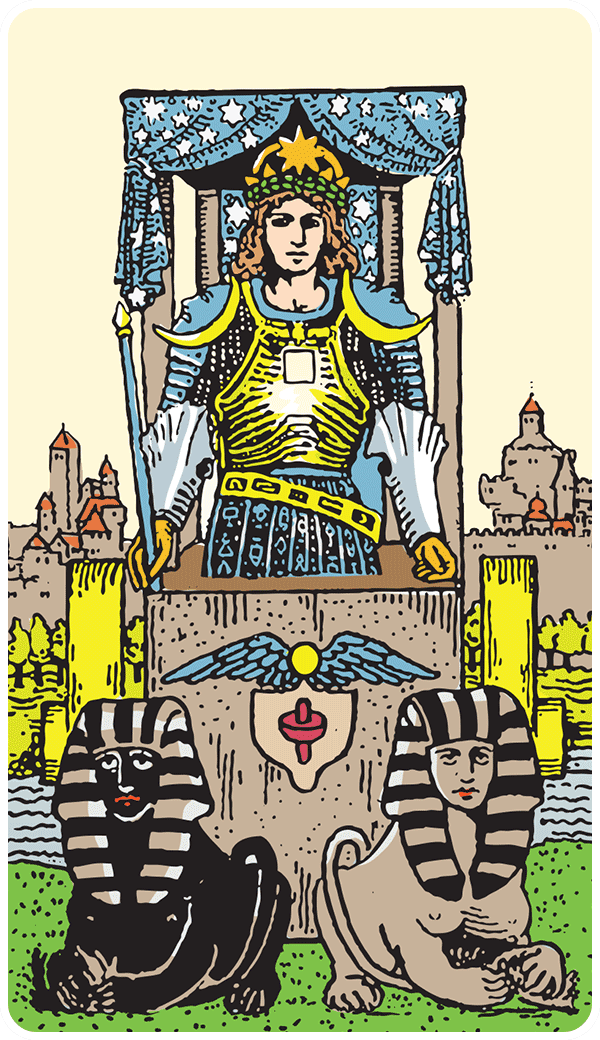
The Chariot · plate 7
What the card is actually doing
The Chariot shows up in a love reading and people hear triumph. Movement. Progress. They think it means the relationship is finally going somewhere, or that they're about to get clarity and direction after weeks of confusion. That is not what the card is describing. The Chariot is about control, and control in a relational context almost always means someone is forcing an outcome instead of letting the relationship tell them what it actually is.
Reading The Chariot in love
What the card is actually showing you
The Chariot is Major Arcana VII, which means it describes a developmental threshold — a psychic task you have to pass through to get to the next stage. It is not about love. It is about will. The image shows a figure in armor, standing in a chariot pulled by two sphinxes or horses moving in opposite directions. The figure holds no reins. The animals are not yoked together. The card's entire tension is in that detail: forward motion is happening, but it is being sustained by force of will alone, not by any natural agreement between the parts.
In a love reading, that translates directly. The Chariot describes the moment someone decides the relationship is going to work and then organizes their entire emotional apparatus around making that true. They stop asking whether the other person is actually available. They stop noticing the mismatch in effort or pace. They white-knuckle through every conversation that should end the relationship, because ending it would mean admitting they can't control the outcome. The card is not celebrating that. It is naming it.
The most common misreading is treating the Chariot as a green light — proof that you're on the right track, that momentum is building, that victory is near. But the card does not say the relationship is working. It says you are working very hard to make the relationship appear to be working, and that the effort is starting to cost you.
How the card reads for two different situations
For someone in the early stages of dating, the Chariot tends to show up when they are trying to engineer attraction in the other person. They are texting at exactly the right intervals. They are performing the version of themselves they think will land. They are treating connection like a campaign. The card is pointing at the exhaustion of that — the fact that real intimacy does not happen when someone is in performance mode.
For someone in an established relationship, the Chariot shows up when they are holding the relationship together by sheer determination while their partner has effectively checked out. They are doing all the initiating. They are managing all the conflict. They have convinced themselves that if they just stay focused and don't waver, the other person will eventually match their effort. The card is naming the fantasy that willpower can substitute for mutual investment.
The tell that you are misreading the card on yourself
You read the Chariot as confirmation that you should keep going, and then you feel a wave of relief followed immediately by exhaustion. That sequence — relief, then exhaustion — is the tell. If the card were actually describing healthy momentum, you would feel energized. Instead, you feel tired, because part of you knows you are spending energy the relationship is not giving back. The Chariot is not telling you to keep going. It is showing you what you are already doing, so you can see the cost.
From the practice
“A card never tells you what to do. It tells you what you're already deciding — and gives you the words to name it.”
A grounded observation
Go back through the last month and count how many times you initiated contact, made plans, or steered a hard conversation back toward resolution. Then count how many times the other person did. The ratio is the reading.
Key themes to watch for
- № 01Theme
Vulnerability
- № 02Theme
New chapters
- № 03Theme
Emotional truth
What to do with this reading
Read the upright meaning first, even if you pulled the card reversed. The reversal is a commentary on the upright — not a separate card.
Notice what your body did when you saw The Chariot. That reaction is usually closer to the truth than the interpretation.
Write down one sentence: What is this card asking me to stop avoiding? Let the answer be smaller than you expect.
Come back to this card in 48 hours. Most love readings sharpen with a little distance.
Questions answered
Frequently asked
In love, The Chariot brings a dynamic energy, suggesting a relationship that's either swiftly progressing or requires a deliberate steering to keep on course. This card might indicate a time when you're working together to overcome obstacles, emphasizing teamwork and shared goals. It's a reminder that mutual effort can lead to a stronger bond. Reflect on how well you and your partner are communicating your needs and directions. Are you both headed towards a shared future, or is it time to redefine your journey together?
The reversed Chariot in a love context hints at a relationship that might feel like it's spinning its wheels. There could be a lack of direction or issues with control, where one or both partners feel constrained or overwhelmed. It's as if you're trying to push forward but keep hitting roadblocks. This could be a moment to pause and reassess whether your relationship is moving in a fulfilling direction. Are there underlying issues that need addressing before you can continue?
The Chariot colors the cards around it. Pay attention to where its themes — archetype, pattern, invitation — show up in the next card. That is usually where the story is.
Tarot is observational, not predictive. The Chariot describes the conditions in front of you right now and where they tend to lead if nothing changes — not a guarantee of timing.
Repeat cards are the deck underlining a theme. With The Chariot, that usually means the question you are asking is the right one — but you have not yet acted on what the card is showing you.
Read next
Related readings
Other The Chariot readings
- General MeaningThe Chariot read for general meaning.
- Career & WorkThe Chariot read for career & work.
- Money & FinanceThe Chariot read for money & finance.
- Health & WellbeingThe Chariot read for health & wellbeing.
- SpiritualityThe Chariot read for spirituality.
- Yes / No AnswerThe Chariot read for yes / no answer.