Eight of Swords in Health
The Eight of Swords in health readings gets read as medical crisis. What it actually names is the mental loop that keeps you from acting on what you already know.
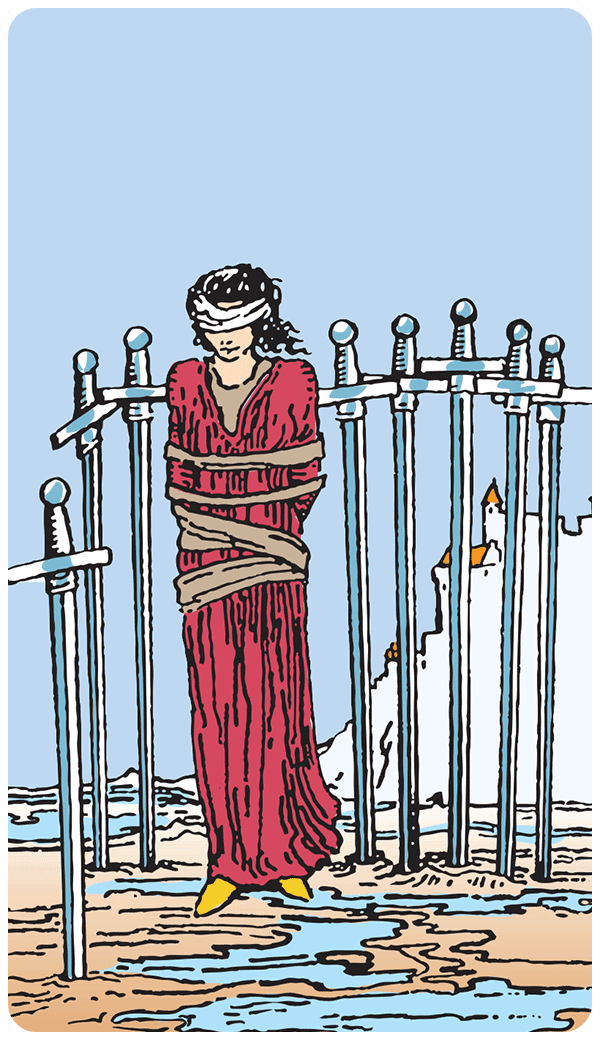
Eight of Swords · plate 8
What the card is actually doing
The Eight of Swords shows up in a health reading and the querent immediately assumes the worst. They think the card is saying they're trapped in a diagnosis, that the body has turned against them, that there's no way out. That is not what the card is doing. The Eight of Swords describes a mental state, not a physical one. It names the moment you convince yourself you have no options when the options are standing three feet away.
Reading Eight of Swords in health
What the suit, the rank, and the image are actually doing
Swords is the mental suit. It governs thought patterns, self-talk, the stories you tell yourself about what is happening and what it means. When Swords cards dominate a health reading, the question is rarely about the body itself — it's about the narrative you've built around the body and whether that narrative is helping or trapping you.
Eights in tarot describe restriction, but not the kind imposed from outside. An Eight is the moment you realize you've backed yourself into a corner through a series of small decisions that felt necessary at the time. The restriction is real, but it's also reversible if you're willing to see how you got there.
Now look at the image. A figure stands blindfolded, surrounded by eight swords stuck upright in the ground. Their hands appear bound. But the swords are not a cage — there are gaps wide enough to walk through. The bindings are loose. The blindfold is the only thing stopping them from seeing that. This is the card's central mechanic: the trap is perceptual, not physical.
In a health context, the Eight of Swords names the moment you stop researching, stop asking questions, stop advocating for yourself because you've decided the situation is fixed and there's nothing you can do. The most common misreading is to take the card as confirmation that the body is broken beyond repair. What it's actually saying is: you've stopped looking for the exit.
How the card reads for two different situations
For someone dealing with chronic illness or long-term symptoms, the Eight of Swords shows up when they've internalized a single doctor's opinion as gospel, when they've stopped seeking second opinions or alternative approaches because they've convinced themselves this is just how it is now. The card is not saying the condition isn't real. It's saying the story you're telling yourself about the condition — that nothing will help, that you've tried everything, that you're powerless — is narrower than the reality.
For someone avoiding a health issue entirely, the Eight of Swords reads differently. It shows up when they know something is wrong, when they've noticed the symptom or the pattern, but they've talked themselves into paralysis. They've decided that looking at it will make it worse, that they can't afford the appointment, that they'll deal with it later. The swords here are the reasons they've stacked up for why they can't act. The blindfold is the refusal to look directly at what they already know.
The tell that you're misreading the card on yourself
You're misreading the Eight of Swords if you finish the reading and feel resigned. If the card confirms that you're stuck and there's nothing to be done, you've taken the image at face value and stopped. The card's actual instruction is forensic: go back through the last six months and look for the moment you stopped asking questions. Look for the appointment you didn't make, the symptom you didn't mention, the second opinion you didn't seek because you'd already decided it wouldn't matter. The Eight of Swords is not describing your body. It's describing the moment you stopped advocating for it.
From the practice
“A card never tells you what to do. It tells you what you're already deciding — and gives you the words to name it.”
A grounded observation
The figure in the card can walk out any time they choose. The question the card is asking is: what would you have to stop believing in order to take the blindfold off?
Key themes to watch for
- № 01Theme
Emotional renewal
- № 02Theme
Mind-body link
- № 03Theme
Soft restoration
What to do with this reading
Read the upright meaning first, even if you pulled the card reversed. The reversal is a commentary on the upright — not a separate card.
Notice what your body did when you saw Eight of Swords. That reaction is usually closer to the truth than the interpretation.
Write down one sentence: What is this card asking me to stop avoiding? Let the answer be smaller than you expect.
Come back to this card in 48 hours. Most health readings sharpen with a little distance.
Questions answered
Frequently asked
In terms of health, the Eight of Swords suggests feeling trapped by anxiety or stress. This card often reflects a sense of being overwhelmed by health concerns, possibly exacerbated by worry. It's important to recognize that some of these fears might be amplified by perception. Are there small, realistic steps you can take to alleviate some of this stress? The card invites you to consider how shifting your focus might improve your well-being.
When reversed, the Eight of Swords indicates a release from health-related fears or stress. You may be finding new ways to manage your well-being more effectively, leading to a calmer mindset. This shift can bring a sense of relief and empowerment. Notice where you feel lighter and how this impacts your daily life. What new practices or perspectives have contributed to this positive change?
Eight of Swords colors the cards around it. Pay attention to where its themes — mental clarity, the truth being named, what the mind needs to release — show up in the next card. That is usually where the story is.
Tarot is observational, not predictive. Eight of Swords describes the conditions in front of you right now and where they tend to lead if nothing changes — not a guarantee of timing.
Repeat cards are the deck underlining a theme. With Eight of Swords, that usually means the question you are asking is the right one — but you have not yet acted on what the card is showing you.
Read next
Related readings
More Swords · Health
- Ace of Swords — HealthHow Ace of Swords reads in a health context.
- Two of Swords — HealthHow Two of Swords reads in a health context.
- Three of Swords — HealthHow Three of Swords reads in a health context.
- Four of Swords — HealthHow Four of Swords reads in a health context.
- Five of Swords — HealthHow Five of Swords reads in a health context.
- Six of Swords — HealthHow Six of Swords reads in a health context.
Other Eight of Swords readings
- General MeaningEight of Swords read for general meaning.
- Love & RelationshipsEight of Swords read for love & relationships.
- Career & WorkEight of Swords read for career & work.
- Money & FinanceEight of Swords read for money & finance.
- SpiritualityEight of Swords read for spirituality.
- Yes / No AnswerEight of Swords read for yes / no answer.