Nine of Wands in Money
The Nine of Wands in a money reading isn't telling you to push through. It's naming the exhaustion that comes from defending a position that might not need defending anymore.
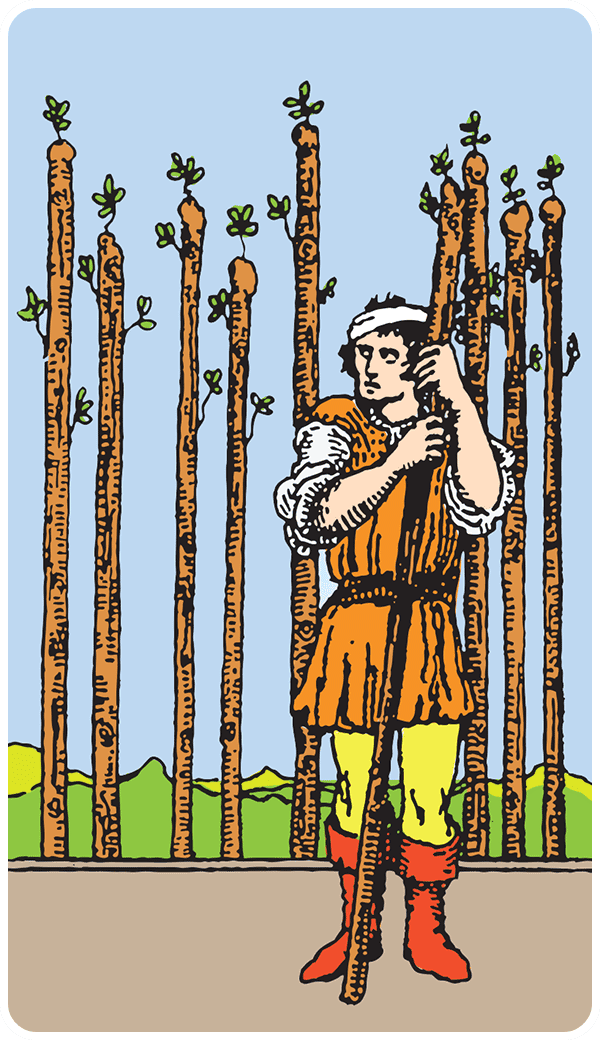
Nine of Wands · plate 9
What the card is actually doing
The Nine of Wands shows up in a finance reading and the querent nods like they already know what it means. They're tired. They've been working hard. They just need to keep going a little longer and then it will pay off. That reading misses what the card is actually describing. The Nine of Wands is not about endurance. It is about the specific exhaustion that comes from holding a defensive position long after the thing you were defending against has moved on.
Reading Nine of Wands in money
What the suit, the rank, and the image are doing
Wands governs energy, will, and the capacity to act. It is the suit of initiative and drive — how you mobilize yourself toward a goal, how you sustain effort over time, and what happens when that effort meets resistance. When Wands cards show up in a finance reading, the question is almost never about the money itself. It is about the energy you are putting into earning it, protecting it, or trying to make it grow.
Nines in tarot are late-stage cards. They sit one card before completion, which means they describe the psychological state of someone who has been at something long enough to be changed by it. The Nine of Wands specifically shows a figure standing with a staff, bandaged, backed by eight other staffs planted in the ground behind them. They are braced. They are watching. They are not resting even though the field is quiet.
The card describes vigilance that has calcified into a permanent stance. The person on the card has been through something — a financial setback, a deal that fell through, a period of instability — and they learned to stay ready. The problem is they are still ready even though the threat is no longer active. What was once a necessary response has become the default.
How this reads differently depending on what the querent is defending
If the querent is someone who has been freelancing or running a business and the Nine of Wands shows up, the card is usually naming the toll of operating without a safety net. They have been in reactive mode for so long that they can no longer tell the difference between a real risk and phantom risk. They turn down opportunities because they feel exposed. They double-check numbers that were already checked. They hold cash in reserve long past the point where holding it costs more than spending it would have earned.
If the querent is someone who went through a bankruptcy, a bad investment, or a period of serious financial precarity, the Nine of Wands describes the scar tissue. They survived, but the survival mechanism is still running. They are over-insured. They avoid debt even when leverage would serve them. They read every market dip as the beginning of another collapse. The card is not saying they are wrong to be cautious. It is saying the caution has become a cage.
The tell that someone is misreading this card on themselves
The querent will say they just need to push through, that they are almost there, that the effort will pay off soon. That is not what the Nine of Wands is describing. Pushing through is the Eight of Wands. The Nine is the moment after the push, when you are still standing in fighting posture even though no one is swinging. The misreading happens when someone treats exhaustion as a sign they are doing the right thing. The card is naming the cost of the stance, not endorsing it.
From the practice
“A card never tells you what to do. It tells you what you're already deciding — and gives you the words to name it.”
A grounded observation
Go back through your finances and look for the place where you are still guarding against a loss that already happened. That is what the Nine of Wands is pointing to.
Key themes to watch for
- № 01Theme
Non-material wealth
- № 02Theme
Generosity
- № 03Theme
Values check
What to do with this reading
Read the upright meaning first, even if you pulled the card reversed. The reversal is a commentary on the upright — not a separate card.
Notice what your body did when you saw Nine of Wands. That reaction is usually closer to the truth than the interpretation.
Write down one sentence: What is this card asking me to stop avoiding? Let the answer be smaller than you expect.
Come back to this card in 48 hours. Most money readings sharpen with a little distance.
Questions answered
Frequently asked
Financially, the Nine of Wands upright suggests a period of vigilance. You've worked hard to secure your resources, and now it's about maintaining that stability. There might be unexpected expenses or challenges, but your past efforts have prepared you to handle them. It's a time to be cautious yet confident in your approach. Consider how this careful stewardship is both a strength and a potential source of stress.
Reversed, the Nine of Wands points to financial strain or exhaustion. It might feel like you're constantly battling to stay afloat, with little relief in sight. This could be a sign that old habits are creating unnecessary stress. Reflect on whether your financial strategies are serving your long-term goals or if it's time to reassess your approach.
Nine of Wands colors the cards around it. Pay attention to where its themes — creative momentum, will and appetite, the spark that wants to be tended — show up in the next card. That is usually where the story is.
Tarot is observational, not predictive. Nine of Wands describes the conditions in front of you right now and where they tend to lead if nothing changes — not a guarantee of timing.
Repeat cards are the deck underlining a theme. With Nine of Wands, that usually means the question you are asking is the right one — but you have not yet acted on what the card is showing you.
Read next
Related readings
More Wands · Money
- Ace of Wands — MoneyHow Ace of Wands reads in a money context.
- Two of Wands — MoneyHow Two of Wands reads in a money context.
- Three of Wands — MoneyHow Three of Wands reads in a money context.
- Four of Wands — MoneyHow Four of Wands reads in a money context.
- Five of Wands — MoneyHow Five of Wands reads in a money context.
- Six of Wands — MoneyHow Six of Wands reads in a money context.
Other Nine of Wands readings
- General MeaningNine of Wands read for general meaning.
- Love & RelationshipsNine of Wands read for love & relationships.
- Career & WorkNine of Wands read for career & work.
- Health & WellbeingNine of Wands read for health & wellbeing.
- SpiritualityNine of Wands read for spirituality.
- Yes / No AnswerNine of Wands read for yes / no answer.