The Hanged Man in Yes / No
The Hanged Man in a yes/no reading says no — not because the thing won't happen, but because forcing it now breaks what you're actually trying to build.
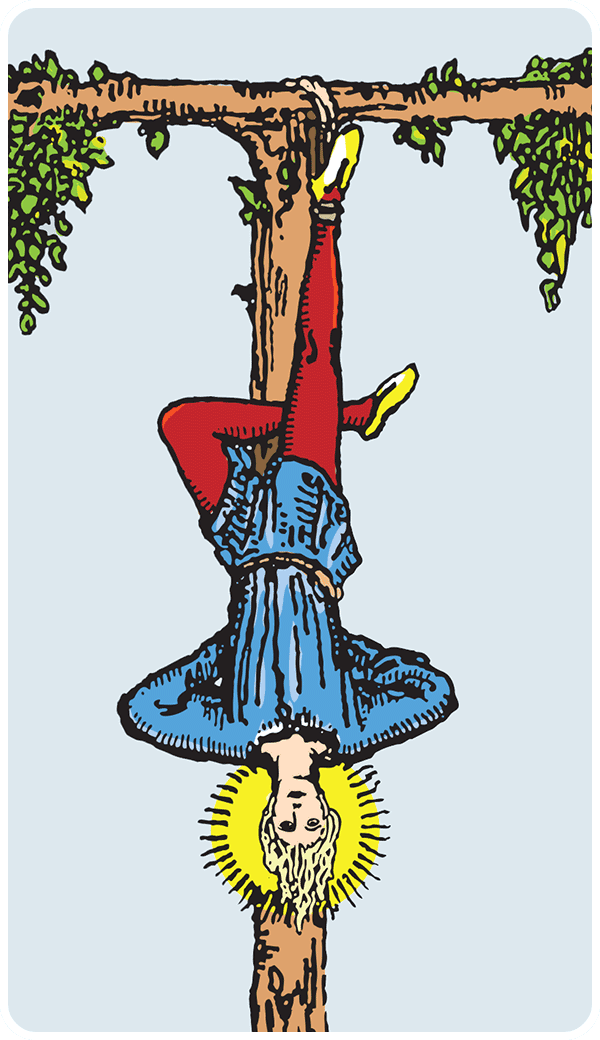
The Hanged Man · plate 12
NO
The Hanged Man in a yes/no reading is a no. Not a hard no. Not a never. But a no to the version of the question you're asking right now, in the frame you're asking it. Most people read this card as cosmic delay — the universe saying 'not yet' for mysterious reasons they're supposed to trust. That's not what's happening. The Hanged Man names the moment when pushing forward costs more than it returns. The card is describing a specific mechanical problem: you are trying to act before the situation has resolved into its actual shape.
Why The Hanged Man reads this way
What the card is actually doing
The Hanged Man is Major Arcana, which means it describes a structural threshold in how you're relating to the question, not a minor tactical delay. The figure is suspended upside-down, bound by one foot, arms behind the back. He is not struggling. The inversion is deliberate. This is not someone stuck; this is someone who has stopped trying to force the door open and is now watching what happens when they stop.
The card describes the pause that produces information you didn't have when you first asked the question. It is the moment when you realize that the thing you thought you wanted is actually three different things, and one of them doesn't survive contact with reality. The yes/no question assumes the terms are stable. The Hanged Man says the terms are still moving. Answering yes or no right now would be answering a question that no longer exists in the form you're asking it.
The most common misreading is treating this as a patience card — as if the right move is to wait passively and trust that clarity will arrive on its own. That is not what the suspension is for. The Hanged Man describes active observation. You are held in place so you can see what you couldn't see while you were moving. The card is not asking you to wait for an answer. It is asking you to notice what changes when you stop trying to make the answer happen.
How the answer shifts depending on what you're actually asking
If the yes/no question is about forcing a decision that someone else hasn't made yet — should I push for the commitment, should I ask for the raise now, should I make them choose — the answer is no. Pushing collapses the information-gathering window. You will get an answer, but it will be a reaction to pressure, not a response to the actual situation. The Hanged Man says the thing you're trying to force into clarity will clarify itself if you stop managing it.
If the question is about whether to stop doing something that isn't working — should I quit, should I walk away, should I let this go — the answer flips to maybe, leaning yes. The card describes the suspension of the old strategy. The Hanged Man is not advising you to keep going. It is naming the moment when you've already stopped, and now you're watching what that stoppage reveals. The yes/no question in this case is often backwards. You're not deciding whether to stop. You've stopped. The question is whether you're going to admit it.
The tell that you're misreading the card on yourself
You keep asking the same yes/no question in different ways, hoping the cards will give you permission to act. You pull the Hanged Man again, get frustrated, decide the deck is broken or the reading didn't take. That frustration is the information. The card is not withholding the answer. The card is saying the question is still attached to a frame that hasn't updated. Go back through your journal and look for the moment when you first asked this question. Notice what you thought the yes or no would solve. Then notice whether that thing is still what you're actually trying to solve.
A grounded observation
The Hanged Man doesn't delay the answer. It delays the question long enough for you to notice whether you're still asking the right one.
Key themes to watch for
- № 01Theme
Affirmative current
- № 02Theme
Open door
- № 03Theme
Forward motion
What to do with this reading
Read the upright meaning first, even if you pulled the card reversed. The reversal is a commentary on the upright — not a separate card.
Notice what your body did when you saw The Hanged Man. That reaction is usually closer to the truth than the interpretation.
Write down one sentence: What is this card asking me to stop avoiding? Let the answer be smaller than you expect.
Come back to this card in 48 hours. Most yes / no readings sharpen with a little distance.
Questions answered
Frequently asked
The Hanged Man in a yes/no reading is a no. Not a hard no. Not a never. But a no to the version of the question you're asking right now, in the frame you're asking it. Most people read this card as cosmic delay — the universe saying 'not yet' for mysterious reasons they're supposed to trust. That's not what's happening. The Hanged Man names the moment when pushing forward costs more than it returns. The card is describing a specific mechanical problem: you are trying to act before the situation has resolved into its actual shape.
Reversed cards are rarely "bad." The Hanged Man reversed asks you to look at where the same theme is blocked, postponed, or being avoided — usually with more compassion than the upright version.
The Hanged Man colors the cards around it. Pay attention to where its themes — archetype, pattern, invitation — show up in the next card. That is usually where the story is.
Tarot is observational, not predictive. The Hanged Man describes the conditions in front of you right now and where they tend to lead if nothing changes — not a guarantee of timing.
Repeat cards are the deck underlining a theme. With The Hanged Man, that usually means the question you are asking is the right one — but you have not yet acted on what the card is showing you.
Read next
Related readings
Other The Hanged Man readings
- General MeaningThe Hanged Man read for general meaning.
- Love & RelationshipsThe Hanged Man read for love & relationships.
- Career & WorkThe Hanged Man read for career & work.
- Money & FinanceThe Hanged Man read for money & finance.
- Health & WellbeingThe Hanged Man read for health & wellbeing.
- SpiritualityThe Hanged Man read for spirituality.