Strength in Health
Strength shows up in a health reading and people think it means they're strong enough to push through. That's not what the card is doing.
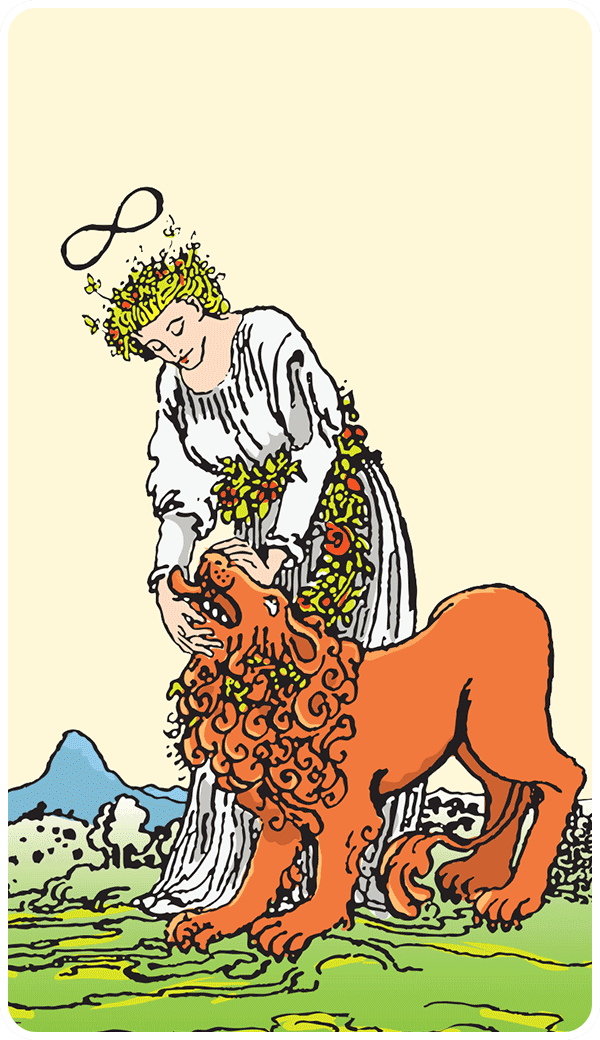
Strength · plate 8
What the card is actually doing
Strength shows up in a health reading and the querent hears permission. They think the card is telling them they can handle more — that their body is resilient enough to push through the fatigue, skip the rest day, override the signal. That is the opposite of what the card describes. Strength is not about force. It is about the specific kind of control that comes from working with a system instead of against it.
Reading Strength in health
What the Major Arcana rank and the image are doing
Major Arcana cards describe large-scale psychological patterns, not day-to-day logistics. Strength is card VIII in the sequence — the moment after the Chariot's willpower sprint, when you learn that willpower alone burns out. The card shows a figure gently closing the jaws of a lion. Not wrestling it. Not dominating it. The lion is not subdued; it is cooperative. The figure wears white, a symbol of clarity, and an infinity symbol floats above her head — the mark of sustained practice, not one-time effort.
In a health context, the lion is the body's appetites, pain signals, energy cycles, and recovery needs. Strength describes the moment you stop treating those signals as obstacles to override and start treating them as information to work with. The most common misreading is to see the card as endorsement: you are strong enough to keep going. But the card is not measuring your capacity to endure. It is naming the practice of listening to the lion before it has to roar.
Here's what tends to happen when Strength shows up and the querent ignores it. They double down. They add another supplement, another protocol, another thing they're supposed to be disciplined about. Six weeks later they're more exhausted than they were at the start of the reading, and they decide their body is the problem. The card was naming the opposite move: the one where you stop adding force and start asking what the system is trying to tell you.
How the card reads for two different situations
For someone in active recovery — post-injury, post-illness, managing a chronic condition — Strength reads as the daily practice of not rushing the timeline. It is the card of the person who stops three reps before failure because they know what happens when they don't. It describes the emotional steadiness required to work at 60% when you used to work at 100%, and to trust that 60% is still movement.
For someone dealing with burnout or adrenal fatigue, Strength reads as the moment you stop performing wellness and start actually resting. It names the gap between I should be meditating and I am too tired to meditate, so I will lie down instead. The card is not interested in your discipline. It is interested in whether you can hear what your body is asking for before it stops asking politely.
The tell that someone is misreading the card
The tell is language. If someone reads Strength and immediately starts talking about what they need to be strong enough to handle, they are reading the Chariot. If they start talking about proving something — to a doctor, to a partner, to themselves — they are reading the Chariot. Strength does not prove. It adjusts. The querent who is reading the card correctly will say something like, I think I've been trying to force this, or I didn't realize how much I was ignoring. They will name a specific signal they have been overriding and a specific choice they are now going to make differently.
From the practice
“A card never tells you what to do. It tells you what you're already deciding — and gives you the words to name it.”
A grounded observation
Go back through the last two weeks and count how many times you talked yourself out of resting when your body asked for it. That number is the gap between what you think Strength means and what it actually describes.
Key themes to watch for
- № 01Theme
Emotional renewal
- № 02Theme
Mind-body link
- № 03Theme
Soft restoration
What to do with this reading
Read the upright meaning first, even if you pulled the card reversed. The reversal is a commentary on the upright — not a separate card.
Notice what your body did when you saw Strength. That reaction is usually closer to the truth than the interpretation.
Write down one sentence: What is this card asking me to stop avoiding? Let the answer be smaller than you expect.
Come back to this card in 48 hours. Most health readings sharpen with a little distance.
Questions answered
Frequently asked
Strength in health reflects a balance between physical vitality and mental resilience. It encourages you to focus on maintaining this equilibrium, promoting both physical exercise and mental calm. This card suggests an opportunity to explore how your mental state impacts your physical health and vice versa. How might you nurture both body and mind in a way that supports your overall well-being?
Reversed, the Strength card may indicate feeling out of sync with your health, be it through stress or physical discomfort. It suggests a period where you might need to pay extra attention to both your mental and physical needs. Consider how stress or neglect might be impacting your health. What small steps can you take to bring yourself back to a place of balance?
Strength colors the cards around it. Pay attention to where its themes — archetype, pattern, invitation — show up in the next card. That is usually where the story is.
Tarot is observational, not predictive. Strength describes the conditions in front of you right now and where they tend to lead if nothing changes — not a guarantee of timing.
Repeat cards are the deck underlining a theme. With Strength, that usually means the question you are asking is the right one — but you have not yet acted on what the card is showing you.
Read next
Related readings
Other Strength readings